Behavioral & Situational Interview Questions

Introduction to Behavioral Questions

You may have heard the term “behavioral question” or “behavioral interview” before. That’s because behavioral interviewing is one of the most popular methods of interviewing used by interviewers in every industry around the globe.

Behavioral interviewing is the practice of focusing on a candidate’s past experiences to gain an understanding of whether or not they will do well in the position they are applying for. When asked behavioral questions, candidates are expected to give the interviewer specific examples of how they handled certain situations in the past.

Image

According to the Society for Human Resource Management, behavioral interviewing is the most effective interview technique in nearly every organization.

How to Prepare for Behavioral Questions

Behavioral interviewing is a technique used during structured interviews. Structured interviews use a standard pre-planned rubric connected to key indicators that have already been proven to predict success.

Don’t worry if this sounds a little complicated! What it essentially boils down to is that behavioral questions use a formula to identify successful candidates, and we’re here to help you crack that formula. Here are simple steps you can take to ace these questions:

Step 1 Understand the S.T.A.R. method

Step 1 Understand the S.T.A.R. method

Known as the gold standard of answering behavioral questions, the S.T.A.R. method is a great tool to have in your toolkit when going into an interview. In the next section, we’ll go into exactly what the S.T.A.R. method is and how you can use it to impress any interviewer!

Step 2 Develop your stories

Step 2 Develop your stories

In order to develop your S.T.A.R. stories, you should identify the qualities that are valued by the company you are interviewing with and determine which of your past experiences showcase those qualities. Once you have come up with a few scenarios, you can put them in the four sections of the S.T.A.R. method. Use the accompanying S.T.A.R. worksheet to help you organize the information.

Step 3 Connect your stories to commonly asked questions

Step 3 Connect your stories to commonly asked questions

While it’s impossible to prepare for every question your interviewer might ask, structured interviews follow a formula, so most interviewers will ask the same kind of questions, no matter what industry or position you’re applying for. You can take advantage of this by connecting your stories to commonly asked questions.

For instance, a common behavioral question asked is, “Can you describe a time when you had a stressful situation at work and how you handled it?” Knowing this may come up during your interview, you can connect one of your S.T.A.R. stories to it. Think about a stressful situation in the past that best showcases the qualities the company is looking for. What’s great is the same story can connect to multiple questions. Later in this guide there is a table titled, “Common Behavioral and Situational Questions”. Use this to ensure your stories cover the range of different categories that an interviewer may ask about.

What is the S.T.A.R. Method?

The S.T.A.R. method is a methodical way of answering behavioral questions. The S.T.A.R. method follows the simple formula outlined below:


Image
Situation

Situation

The situation is a specific event or circumstance you were in. When describing the situation, don't be vague. Make sure to give the most focused account possible to the interviewer.

Task

Task

The task is the goal you were working toward in the above situation. The task must be specific and quantifiable.

Action

Action

The action describes the specific acts you took to accomplish your task. Make sure to focus on things YOU did — don’t spend too much time talking about what your team or group did as the interviewer will be more interested in YOUR contribution.

Results

Results

The result is the outcome of your action. Make sure to detail how the event ended, what you learned, and your role in bringing about that outcome.

Take a look at the shortened example below to get an idea of what your scenarios should look like:

Situation

“Advertising revenue was falling last quarter in my previous role at Digital Marketing Weekly, and we were losing viewers.”

Task

“My goal was to generate content that would result in a 10% increase in viewership and lead generation.”

Action

“I commissioned a report that focused on helping our target audience drive sales for the upcoming holiday and used it to capture qualified leads.”

Result

“The report resulted in over 60 new leads as well as a 17% increase in viewership for the following quarter.”

The purpose of the S.T.A.R. method is to ensure you discuss the important aspects of a past event in order to provide your interviewer with a concise-but-detailed account.

When using the S.T.A.R. method, it’s important to be as specific as possible. You don’t want to give a generalized account of a dozen events; instead, you want to give a detailed account of 3-4 events that really highlight your skills.

When determining which past scenarios to use, it’s important to select scenarios that will highlight your positive attributes. Unfortunately, the interviewer may ask questions about situations in which you’ve failed or experienced conflict. So, what do you do then?

First of all, don’t panic! Nobody’s perfect, and we all fail at least once. It’s perfectly natural that an interviewer would want to know how you reacted in the face of failure and adversity.

It’s important that you choose a past experience in which there was some sort of positive outcome. Maybe you had to redo an entire project, but your client was thrilled with the new result. Maybe a client was very upset, and you learned that you should run your work by an editor before submitting it. Whatever the experience you decide to utilize, focus on times that you overcame the odds or learned a valuable lesson.

Image

Introduction to Situational Questions

Situational interviewing is another interviewing technique that is closely related to behavioral interviewing. Situational questions focus on hypothetical future scenarios, while behavioral questions focus on past scenarios that actually happened.

In other words, situational questions are specifically designed to test how you would handle situations if you were to get the job. They can be more challenging to answer than behavioral questions and can require additional preparation, depending on the job you are applying for.

Why Do Interviewers Ask Situational Questions?

Situational questions are an effective way for interviewers to gauge how you will perform in a specific job. Whereas behavioral questions focus on how you performed in your past workplaces, situational questions give interviewers a first-hand look at how you may perform in this new role.

Interviewers also love to ask situational questions because they are difficult to prepare for. While you can prepare for behavioral questions by studying the most commonly asked questions, it’s harder to prepare for situational questions because they tend to be tailored specifically for the job you are applying for. Hence, situational questions force candidates to think on their toes and are a good way for interviewers to evaluate how a candidate performs under pressure.

How to Prepare for Situational Questions

Answering situational questions is a little different from answering behavioral questions. While you can look back on past experiences to answer behavioral questions, answering situational questions can seem more difficult because they focus on scenarios that have not happened yet.

However, these questions are easier than they seem to be. The answers simply rely on your common sense. Answer the questions with a vision of the best professional version of yourself. How would that superstar react in the situation? What steps would they follow to ensure the problem was solved?

If you’re presented with a situational question that you aren’t prepared for, utilize these tips:

Image

When possible, connect your answers to the company values you found during your research. If an interviewer asks, "How will you handle a big organization-wide change?", your answer may differ depending on whether the company values innovation or tradition.

Common Behavioral and Situational Questions

Here are the most common behavioral and situational questions broken down by category. Review this list to be ready for anything:

Did you know?

According to The Undercover Recruiter, the number one question most likely to be asked in an interview is: “Tell me about yourself.”

How to Answer Other Common Interview Questions

Now that we know how to answer behavioral and situational questions, let’s take a look at some other common questions that may come up in an interview.

Can you tell me about yourself?

When it comes to this question, candidates often fail to take into account the context of why it’s being asked. When people ask you this question in your everyday life, they want to hear about your interests, hobbies, and similar things about your life.

However, when a potential employer asks this question, they’re asking you to tell them about yourself as a professional.

Let’s take a look at what an appropriate answer to “tell me about yourself” might look like:

“I’m a digital marketer with over 6 years of experience in the health and wellness sector. My specialty is curating content for start-up companies and handling their creative market strategy, something that has always been a passion of mine. I started my career as an advisor to several local businesses but have since moved on to working with nationwide corporations.

I’ve been with my latest company, Content Unlimited, for the last 3 years and have won several performance awards in my department. I manage a team of marketers, so I set and oversee goals related to generating sales revenue online. Just this year, I implemented an in-house content-sharing system that boosted productivity for the quarter by 15%, and productivity has seen an upward trend since. ”

This answer gives a concise view of the candidate’s background while showcasing their passion and the quality of their work within the industry. Remember, when talking about yourself, keep it short and sweet!

Image

Can you walk me through your resume?

“Can you walk me through your resume” is a common question that trips up a surprising amount of candidates. Where most candidates go wrong is taking this question literally and proceeding to spend the next 10 minutes reading their resume.

Unfortunately, that’s not what they’re looking for.

When interviewers ask you this question, they want you to give them a brief summary that touches on all of the important parts of your career. That way, they can ask you to expand on any parts that interest them.

Let’s take a look at a sample answer to this question:

“I graduated from the University of Miami with a degree in economics and knew that I wanted to break into the business sector. My first job was with Talent Acquisitions as an actuary where I worked with other senior financial advisors to calculate the risk associated with future events for five years. I ended up getting a promotion as well as a performance award in my department. I used that as leverage to move my way up to a senior level position, and I’ve been working in that position ever since.”

Image

Why do you want to work here?

This question gives the interviewer insight into:

Whether or not a candidate will be a good fit within the company.

If the candidate will be motivated to perform well.

Whether a candidate took the time to research the company before coming into the interview.

Now that we know why this question is so important, let’s take a look at a sample answer:

“I read an article by the CEO, Travis Fontain, on Entrepreneur Weekly and was really impressed by his vision of how businesses will operate in the future. I consider myself an innovative businessman as well, and I would love to work with a company that has such a futuristic outlook on the industry.”

This answer is great because it shows the candidate:

  • Did their research before the interview. 
  • Personally identifies with the culture of the company.
  • Is looking at the job as a long-term position.

Utilize all of the company research you conducted in the Research Worksheet to formulate your own response.

We’ve covered a good amount of information in this guide, but that’s not all!

Also, stay tuned for the next part of our exclusive training program:

Technical Questions where we’ll go over topics such as:

  • Why are technical questions important to interviewers?
  • How to research industry standards and best practices.
  • What do interviewers expect when you're answering technical questions?

Assignment

Practice makes perfect! The best way to improve your interviewing skills is to complete practice mock interviews. Our online Interview Simulator tool makes taking practice interviews easy. Follow these steps to complete a practice behavioral interview to implement the strategies you learned in this guide:

Image

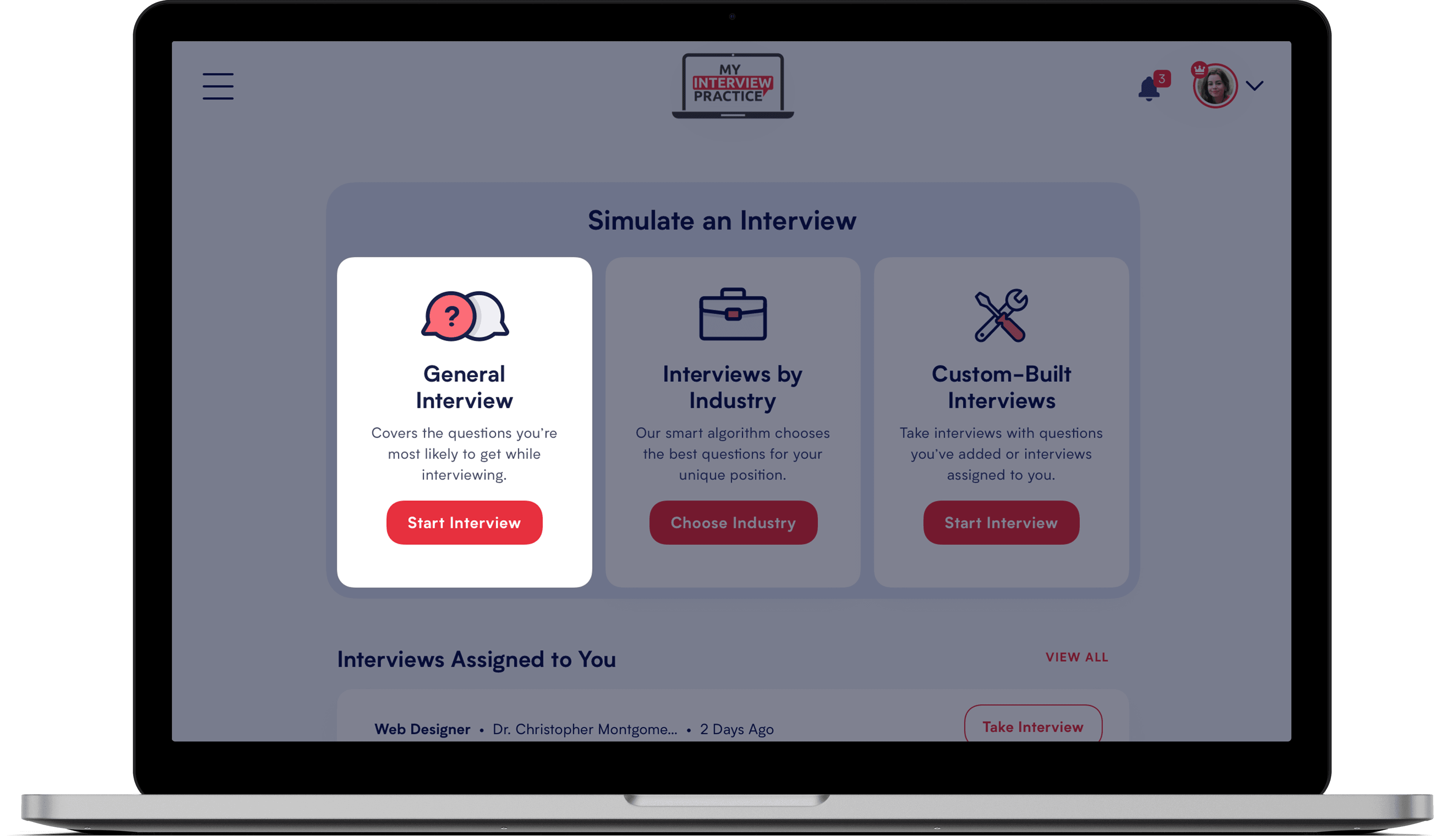
Step 1

From the dashboard, click on the “Start Interview" button in the "General Interview" section. These interviews will cover behavioral questions that span across most industries and professions.  

Image

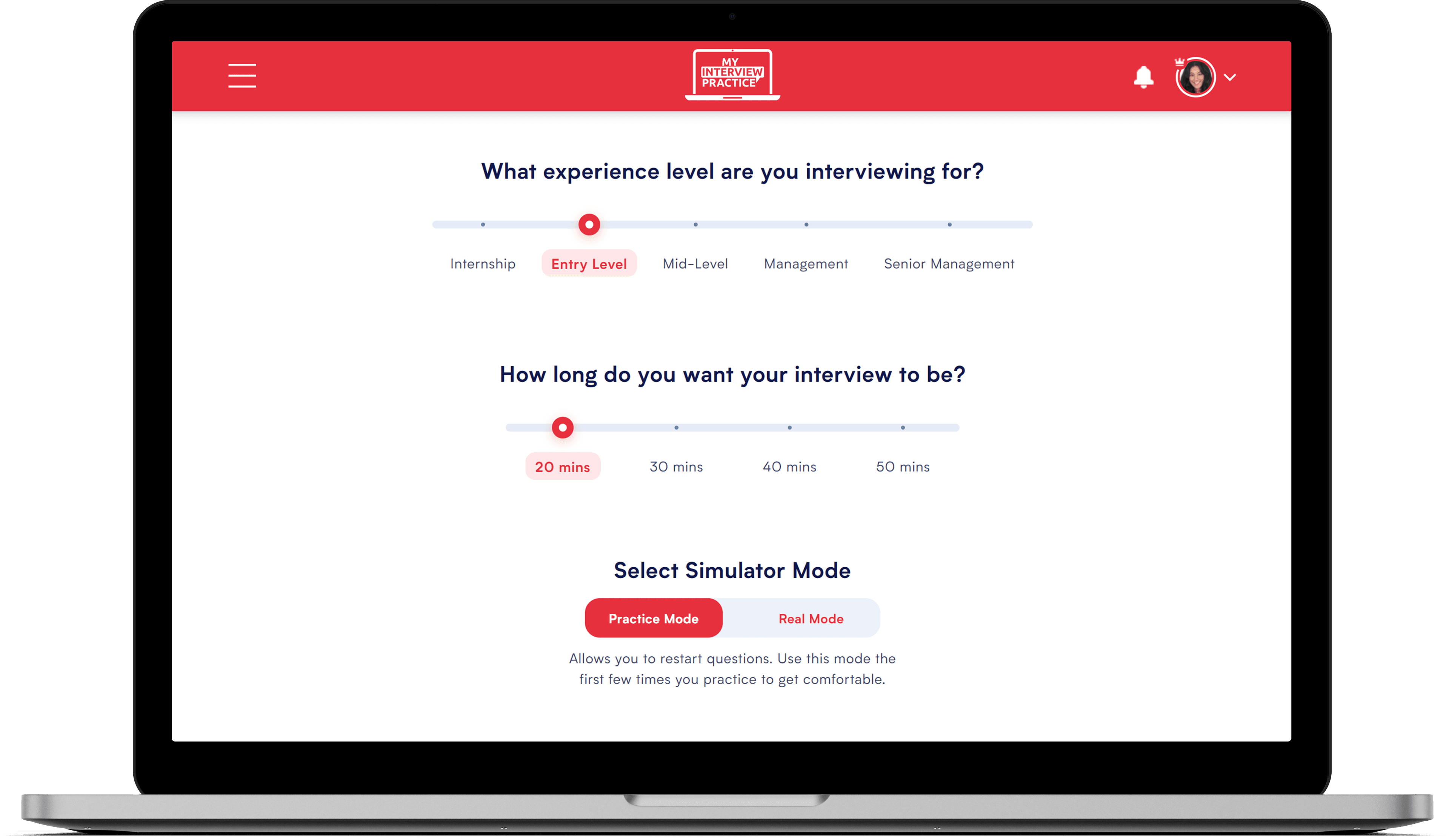
Step 2

Next, the tool will take you through the type of interview you want to take. Based on all of these selections, our algorithm will instantly begin curating an interview script of what questions should be asked.

Image

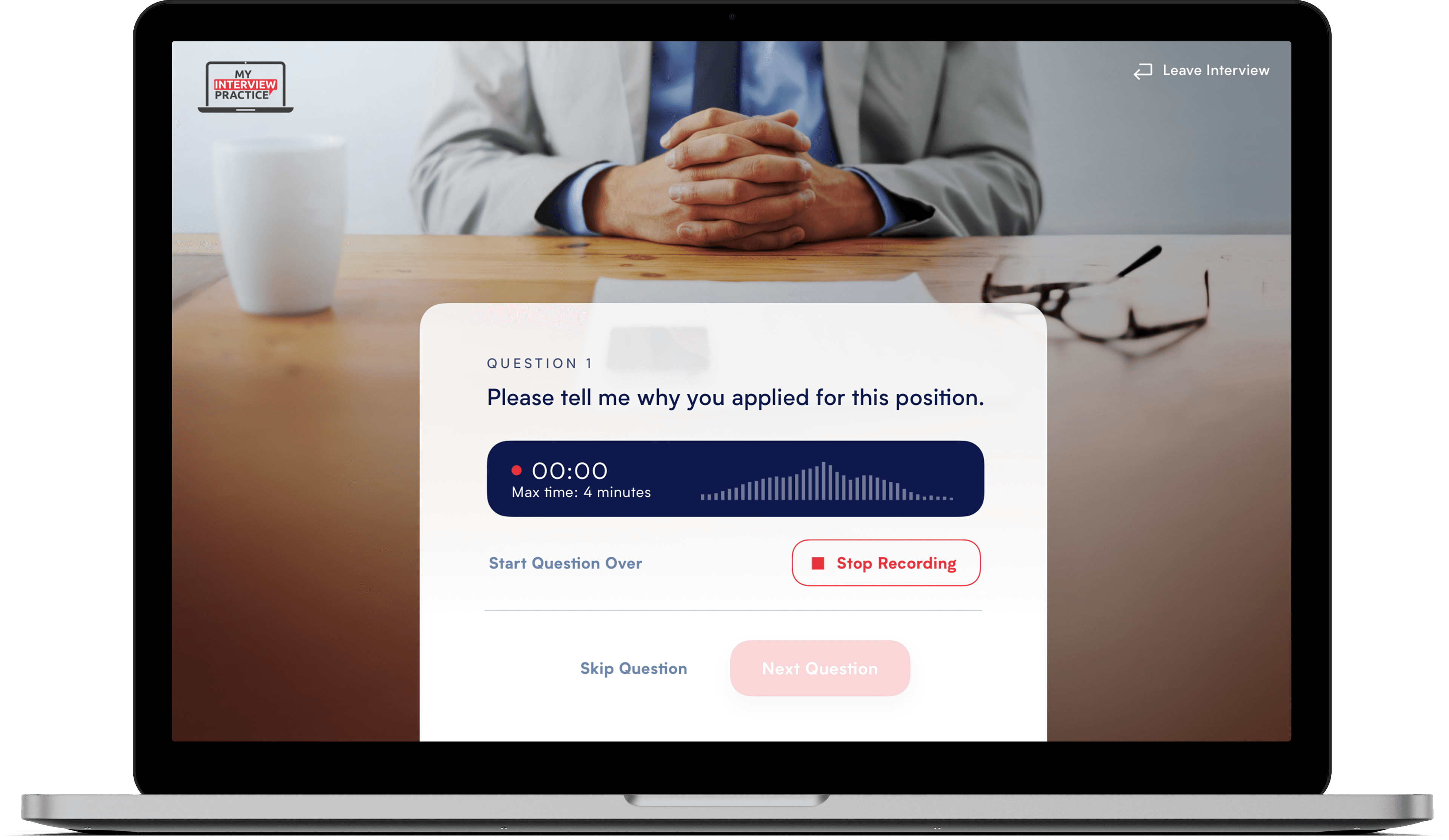
Step 3

When you start practicing in the Interview Simulator, you won't know the questions, just like a real interview! As questions appear on the screen, the simulator will record your responses. After you've completed an interview, be sure to review your responses. In the final summary section it will show you how to objectively rate your interview recording so you can better understand what interviewers may be looking for.